

Pāli Buddhism : ค้นหาหนังสือธรรมะ หน้า 3 / 6
หน้าหนังสือทั้งหมด
190
Maintaining Buddhism Amidst Crisis
When people lose their faith in Buddhism, they do not
teach their children to pay respect to the monks. They show
no interest in studying Buddhist teachings and stop making
merit. All temple activitie
When faith in Buddhism wanes, respect for monks declines, leading to a stagnation of temple activities. Negative portrayals of monks can mislead the public; thus, critical thinking is essential. The S
6
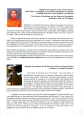
Revival of Cambodian Buddhism Post-Pol Pot
Digest from speech of Ven. Chuon Bunsim Head Office of Pedadogy of the General Inspection for National Buddhist Education of the Kingdom of Cambodia
The History of Buddhism and the Revival of Cambodi
Buddhism in Cambodia faced severe decline during the Pol Pot regime when monks were forced to abandon their vows and temples were destroyed. After the 1980s, efforts to restore Buddhism began, as the
16
Dissemination of Buddhism and the Noble Eightfold Path
Part 2
The Theory
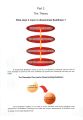
What does it mean to disseminate Buddhism ?
Dissemination of Buddhism
↓
The Lord Buddha’s Teachings
↓
Reside in the Mind of Every Individual
↓
Practice Them until They Become habits
The dissemination of Buddhism involves instilling the Lord Buddha’s teachings into the minds of individuals so they can practice these teachings as habits. Central to this process is the Noble Eightfo
253
Buddhism Studies and Literature
Sam Nhean. (1957). The History of Buddhism in Cambodia. Phnom Penh : TraiRat
Saddhātissa, H. 1990. Pāli Literature of South-East Asia. Singapore: Singapore Buddhist Meditation Centre.
Sehrai, Fidaulla
This text contains references to significant works in the study of Buddhism, including historical accounts, Pāli literature from Southeast Asia, and studies on the influence of Indian Buddhism and its
16
Launch of the Journal of the Dhammachai International Research Institute
Introduction
This collection of articles marks the launch of the Journal of the Dhammachai International Research Institute (JDIRI). The articles presented here indicate some of the perspectives on B
This collection of articles marks the launch of the JDIRI, showcasing perspectives on Early Buddhism and meditation studies. The journal aims to publish research on ancient manuscripts and esoteric pr
33
Reinterpreting Dhammarāya in the Pali Canon
Most of them refer only to the Aggañña-sutta passage, 4 missing out the three Apadāna references. 5 The reason could be either that the scholars concerned have taken the aforementioned text as represe
This paper examines the overlooked references to dhammarāya in the Pali canon, emphasizing a context not previously presented. It critiques the tendency to categorize texts strictly as ‘early Buddhism
569
Academic Contributions to Buddhist Studies
University of Washington.
Lévi, Sylvain. 1932. Mahākarmavibhanga (La Grande Classification des Actes) et Karnavibhangapadéša (Discussion sur le Mahā Karmavibhānga). Paris: Librairie Ernest Leroux.
Luo
This text references several significant academic contributions to Buddhist studies. Sylvain Lévi's work on Mahākarmavibhanga highlights the classification of deeds in Buddhist philosophy. Luo and Hon
35
Exploring the Concept of Dhammakāya in Pali Canonical Texts
Of the three canonical passages mentioned above, only the first, namely the Aggañña-sutta passage, contains the term dhammakāya, while the other two do not. The reason for which all these passages are
This study reexamines the term dhammakāya in specific Pali canonical passages, notably the Aggañña-sutta, contrasting it with previous scholarly interpretations that often exclusively link the term to
90
Buddhist Manuscripts from Sipsong Panna Region
Buddhist manuscripts from the Sipsong Panna region can be divided into four categories. The first category consists of the Dai Pāli Tripiṭaka and Tripiṭaka commentary (三藏琢) which is represented by fiv
Buddhist manuscripts from the Sipsong Panna region are categorized into four main groups: the Dai Pāli Tripiṭaka and Tripiṭaka commentary, frequently used Pāli Canon texts, Theravāda Buddhist literatu
68
Sanskrit and Pali Text Dictionaries
MW A Sanskrit-English Dictionary. 1960. Sir Monier Monier-Williams. Oxford: The Clarendon Press.
PTSD The Pali Text Society’s Pali-English Dictionary. 1989. T.W. Rhys Davids and William Stede. London:
This content highlights notable dictionaries relating to Sanskrit and Pali, including the 'Sanskrit-English Dictionary' by Sir Monier Williams published in 1960, and the 'Pali-English Dictionary' by T
60
ประวัติของวรรณกรรมปารีในภูมิภาคต่างๆ
บิมัลเอนดรา คูมาร์.
1992. Gandhavamsa: A History of Pali Literature. New Delhi:
Eastern Book Linkers.
คาบาตอน, เอ.
1980. Catalogue Sommaire des Manuscrit Sanscrit et Pāli.
ปารีส: Ernest Leroux.
ไกเก
เอกสารนี้นำเสนอประวัติและการศึกษาเกี่ยวกับวรรณกรรมปารีซึ่งมีความสำคัญต่อการศึกษาทางพระพุทธศาสนา ซึ่งรวมถึงผลงานสำคัญจากนักวิจารณ์ต่างๆ ที่มีอิทธิพลต่อวรรณกรรมนี้ เช่น บิมัลเอนดรา คูมาร์ และวิลเฮล์ม ไก
235
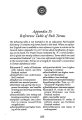
Reference Table of Pali Terms
Appendix D:
Reference Table of Pali Terms
The following table is not intended to be an exhaustive Pali-English dictionary: it contains only terms found in this book. Where an equivalent English term
The reference table provides a selection of Pali terms related to Buddhist philosophy, arranged alphabetically for ease of use. Each term is accompanied by English translations and necessary clarifica
181
Understanding External and Internal Fools in Buddhism
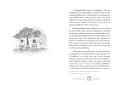
1) External Fools include non-Buddhists. They are determined to demolish Buddhism, whether they are of other religious affiliations or not. They typically try to cast aspersions upon Buddhist monks. W
In Buddhism, External Fools are non-Buddhists who seek to distort and undermine Buddhist teachings, casting aspersions on monks and creating confusion. Internal Fools, on the other hand, are Buddhists
139
Buddhist Texts and Historical Studies
The SAT Daizōkyō Text Database Committee. “出三藏記集 (No. 2145 (僧祐提)) in Vol. 55.” Taishō Shinshū Daizōkyō (大正新修大藏經), March 17, 1998. http://21dzk.l.u-tokyo.ac.jp/SAT/ddb-sat2.php?mode=detail&useid=2145,_
This collection includes significant Buddhist texts and studies, such as the Mahāyāna Buddhism foundations by Paul Williams and insights into early Chinese Buddhism by Erik Zürcher. Scholarly works di
5
การวิเคราะห์วิถีทางพระพุทธศาสนา
164
ธรรมาธรรม
วิเคราะห์วิถีทางพระพุทธศาสนา ปีที่ 6 ฉบับที่ 1 (ฉบับรวมที่ 10) ปี 2563
Mahāyāna Buddhism:
Reasons for Diversity in the Buddha’s Teachings
SASAKI Shizuka
Abstract
Buddhism in the peri
บทความนี้วิเคราะห์ความแตกต่างของแนวคิดในพระพุทธศาสนา โดยมุ่งเน้นที่พระพุทธศาสนามหายานที่มีความคิดชนิดหนึ่งที่ต่างออกไปจากคำสอนของพระโสดาบัน โดยอ้างอิงถึงเหตุการณ์ในสมัยพระเจ้าอโศก ซึ่งเป็นช่วงเวลาที่เ
3
Western Buddhist Model
Western Buddhist Model
Uthit Siriwan
Abstract
Purpose of this article aims to analyze “current situation” of Buddhism in the West in three parts. Firstly, Propagation of Buddhism in the West will be
This article by Uthit Siriwan explores the current situation of Buddhism in the West, analyzing its propagation methods, summarizing existing models, and forecasting future trends. The discussion high

94
หัวใจพระพุทธศาสนา
A&B
สนทนาธรรมยามว่าง
โดย : ดวงธรรม
หัวใจพระพุทธศาสนาคืออะไร
A: What is the heart of Buddhism?
(หัวใจพระพุทธศาสนาคืออะไร)
B: Actually, the Lord Buddha did not particu-
larly state which one of His Teac
หัวใจพระพุทธศาสนาคืออะไร A: What is the heart of Buddhism? (หัวใจพระพุทธศาสนาคืออะไร) B: Actually, the Lord Buddha did not particu- larly state which one of His Teachings was the heart of Buddhism. (อ

135
เป้าหมายของพระพุทธศาสนา
assured of His enlightenment.
(เนื่องจากทรงปฏิบัติกิจที่จะต้องทำในอริยสัจ ๔ เสร็จสิ้น
สมบูรณ์แล้ว พระสัมมาสัมพุทธเจ้าจึงทรงมั่นพระทัยปฏิญาณ
พระองค์ว่าบรรลุอนุตตรสัมมาสัมโพธิญาณแล้ว)
A : Is the goal of
(เป้าหมายของพระพุทธศาสนานั้นมีที่มาจากปฐมเทศนาใช่ไหม ครับ) B : Yes, it is. Actually there's more than one goal of Buddhism. And the ultimate goal of Buddhism is the end of suffering or Nirvana. (ถูกแล
61
The Pali Language and the Theravadin Tradition
NORMAN, K.R.
1983 “The Pali Language and the Theravadin Tradition.”
A History of Indian Literature: 1-2, edited by Jan Gonda. Wiesbaden: Otto Harrassowitz.
PEW Research Center.
2017 “World Bu
This text discusses the significance of the Pali language within the Theravadin Buddhist tradition. It examines its historical roots, literary contributions, and the ongoing impact on Buddhist practic

32
ความเชื่อในพระพุทธศาสนา
I HAVE NO RELIGION
REALLY. BUT I THINK
BUDDHISM IS THE
STRONGEST BELIEF I
HAVE.
๓๐ กัลยาณมิตร
Seeing his Inner
Body
On the first day of meditating,
the novice was not even able to
visualize a crystal
I HAVE NO RELIGION REALLY. BUT I THINK BUDDHISM IS THE STRONGEST BELIEF I HAVE. ๓๐ กัลยาณมิตร Seeing his Inner Body On the first day of meditating, the novice was not even able to visualize a crystal